
OEM Vehicle Manufacturing AI
Transform electronics manufacturing with AIoT for smarter SMT, traceability, workforce, inventory, and compliance.
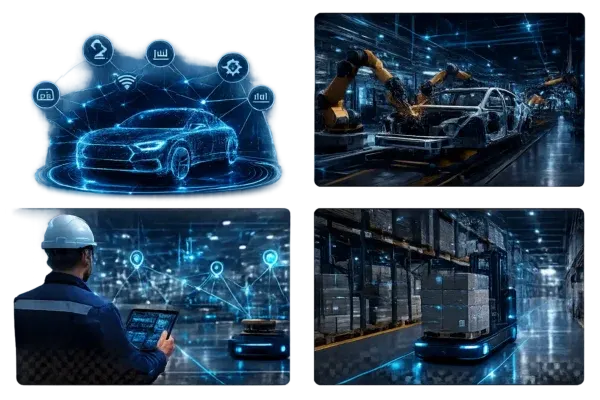
OEM Vehicle Manufacturing AI
AIoT Manufacturing System for OEM Automotive Production, Vehicle Traceability, Workforce Visibility, and Smart Factory Operations
OEM Vehicle Manufacturing AI delivers enterprise AIoT systems designed specifically for OEM automotive manufacturing environments requiring real-time production visibility, RTLS workforce system, VIN genealogy tracking, industrial IoT telemetry, inventory synchronization, manufacturing execution analytics, and factory-wide operational orchestration.
The system supports automotive body shops, robotic welding cells, paint shop operations, powertrain assembly lines, EV battery manufacturing facilities, sequencing centers, intralogistics corridors, warehouse distribution zones, automated conveyor systems, and finished vehicle yard operations through integrated AI analytics, industrial wireless infrastructure, edge computing, and OT/IT convergence system.
Modern OEM automotive production environments depend on synchronized movement between operators, AGV fleets, torque tooling systems, robotic automation cells, returnable containers, sequencing racks, material handling systems, and manufacturing execution systems. OEM Vehicle Manufacturing AI unifies these operational layers using AI-driven manufacturing system combined with industrial IoT telemetry, RTLS positioning, and enterprise factory connectivity.
The system is engineered for automotive manufacturing organizations operating:
- High-volume vehicle assembly plants
- Mixed-model automotive production lines
- EV and hybrid vehicle manufacturing facilities
- Powertrain and drivetrain assembly
- Robotic body-in-white environments
- JIT and JIS inventory workflows
- Smart warehouse logistics systems
- Multi-site automotive manufacturing operations
- Supplier sequencing facilities
- Automated intralogistics environments
OEM Automotive Manufacturing AIoT Overview
OEM automotive manufacturing plants generate massive volumes of operational telemetry from PLC systems, robotic weld controllers, torque verification stations, machine vision inspection systems, AGV navigation systems, RTLS infrastructure, MES environments, industrial device, and automated material handling systems. Automotive manufacturers require AIoT systems capable of transforming this operational data into synchronized manufacturing system.
OEM Vehicle Manufacturing AI combines:
- AI manufacturing analytics
- RTLS positioning infrastructure
- Industrial edge computing
- Workforce visibility systems
- VIN traceability system
- WIP monitoring systems
- Inventory orchestration analytics
- Industrial wireless connectivity
- Manufacturing KPI visualization
- OT and IT integration system
The system supports automotive manufacturing interoperability requirements including:
- OPC UA manufacturing integration
- MQTT industrial event streaming
- REST manufacturing APIs
- Industrial Ethernet communication
- Modbus protocol translation
- CAN bus telemetry ingestion
- Kafka manufacturing pipelines
- MES and ERP synchronization
- PLC and SCADA interoperability
- Unified namespace systems
OEM Vehicle Manufacturing AI supports synchronized manufacturing system across:
- Body-in-white operations
- Paint shop conveyor systems
- Chassis and drivetrain assembly
- Final vehicle assembly lines
- EV battery pack manufacturing
- Smart warehouse logistics
- Supplier receiving operations
- Vehicle sequencing centers
- Quality engineering environments
- Finished vehicle yards
Automotive manufacturing operations require deterministic production visibility because disruptions involving sequencing racks, line-side inventory, torque tooling, AGV coordination, workforce allocation, or supplier logistics can directly affect takt time performance, OEE targets, and vehicle production throughput.
Workforce Visibility System
OEM automotive manufacturing environments require continuous workforce visibility to maintain production safety, access governance, labor coordination, and operational compliance across large-scale smart factory operations.OEM Vehicle Manufacturing AI delivers workforce visibility system using UWB RTLS infrastructure, BLE workforce telemetry, AI safety analytics, industrial edge processing, and smart access control orchestration.
The workforce system system supports:
- Real-time operator tracking
- Assembly line workforce mapping
- Contractor movement monitoring
- Safety zone occupancy visibility
- Restricted area authorization
- Smart factory access control
- AI badge verification
- Touchless workforce entry
- PPE compliance monitoring
- Emergency evacuation coordination
Manufacturing workforce system supports:
- Shift transition coordination
- Production staffing optimization
- Labor utilization analytics
- Workforce congestion monitoring
- Operator assignment tracking
- Human-machine separation alerts
- Forklift pedestrian detection
- Heat stress monitoring
- Fatigue exposure analytics
- Cross-plant workforce synchronization
The workforce visibility system supports deployment across:
- Body shop welding lines
- Paint booth operations
- Battery module assembly zones
- Powertrain manufacturing cells
- Final assembly stations
- Logistics staging corridors
- Warehouse transfer areas
- Smart sequencing centers
- Supplier material receiving
- Vehicle yard operations
UWB RTLS positioning systems provide highly accurate personnel visibility within robotic welding cells, EV battery assembly environments, paint shop facilities, AGV traffic zones, and high-voltage manufacturing areas. BLE workforce telemetry enables scalable monitoring across larger automotive production campuses and warehouse operations.Industrial edge analytics process workforce safety telemetry locally to reduce latency for safety-critical events involving AGV movement, robotic welding systems, conveyor automation, and autonomous transport operations. Operational safety system can synchronize with MES systems, EHS systems, and enterprise manufacturing dashboards in real time.
Vehicle And Asset Tracking System
Automotive manufacturing environments require synchronized visibility across mobile assets, production tooling, returnable packaging, sequencing racks, AGV fleets, line-side inventory, and finished vehicle logistics.OEM Vehicle Manufacturing AI provides AI and IoT asset system using RFID manufacturing systems, UWB RTLS infrastructure, BLE industrial telemetry, GPS yard visibility, and industrial device analytics.
The automotive asset visibility system supports:
- Finished vehicle yard tracking
- VIN movement visibility
- Smart yard positioning
- Carrier loading coordination
- Inbound vehicle sequencing
- AGV fleet visibility
- Torque tool tracking
- Welding fixture monitoring
- Mobile cart positioning
- Calibration asset monitoring
The inventory system environment supports:
- Kanban inventory tracking
- Sequenced parts visibility
- Returnable container tracking
- Rack utilization monitoring
- Line-side inventory analytics
- RFID inventory orchestration
- Smart shelf telemetry
- Warehouse material visibility
- Supplier delivery synchronization
- Cross-dock material flow
Material handling analytics provide operational solution for:
- Tugger route optimization
- Forklift utilization monitoring
- Dock movement analytics
- ASRS synchronization
- Automated conveyor visibility
- Warehouse transfer coordination
- Yard logistics optimization
- EV battery movement tracking
- Powertrain material visibility
- Production asset utilization
AI manufacturing analytics identify:
- Production bottlenecks
- AGV congestion patterns
- Inventory shortages
- Asset dwell time anomalies
- Sequencing delays
- Dock scheduling conflicts
- Warehouse inefficiencies
- Idle tooling utilization
- Throughput inefficiencies
- Material flow disruptions
Automotive manufacturers frequently require continuous visibility into line-side inventory movement because disruptions involving sequenced components, battery modules, chassis assemblies, or returnable racks can interrupt JIT and JIS manufacturing workflows.
Production Execution Visibility
OEM automotive manufacturing plants require continuous visibility into work-in-progress movement, vehicle sequencing, production synchronization, VIN genealogy, and final assembly progression.OEM Vehicle Manufacturing AI delivers production execution visibility through RTLS manufacturing tracking, AI assembly analytics, MES-integrated telemetry, and real-time factory system.
Production execution visibility supports:
- Vehicle build progression tracking
- VIN production monitoring
- Chassis movement visibility
- Powertrain assembly system
- Body shop throughput analytics
- Paint process monitoring
- Final assembly coordination
- WIP progression analytics
- Torque sequence verification
- Manufacturing downtime visibility
Automotive manufacturers require VIN-level genealogy system supporting:
- Recall investigation workflows
- Supplier batch traceability
- Quality compliance reporting
- Component genealogy analytics
- Paint process traceability
- Weld traceability monitoring
- EV battery genealogy tracking
- End-of-line validation
- SPC automation analytics
- Manufacturing audit readiness
AI manufacturing analytics correlate telemetry across:
- Machine vision systems
- Torque verification stations
- Weld inspection systems
- Robotics controllers
- PLC manufacturing data
- Environmental monitoring device
- MES execution records
- Quality inspection systems
- Conveyor telemetry
- Production historian systems
Manufacturing system improves:
- OEE optimization
- Takt time consistency
- Production balancing
- Assembly throughput
- Downtime reduction
- Quality forecasting
- Inventory synchronization
- Logistics coordination
- Workforce allocation
- Maintenance scheduling
Industrial IoT Connectivity
Automotive manufacturing facilities require industrial IoT systems capable of supporting secure OT connectivity, high-density telemetry processing, industrial protocol interoperability, and scalable event streaming across smart factory environments.
OEM Vehicle Manufacturing AI supports industrial wireless technologies including:
- Private 5G manufacturing networks
- Wi-Fi 6 industrial infrastructure
- UWB RTLS positioning systems
- BLE manufacturing telemetry
- RFID manufacturing visibility
- Industrial Ethernet synchronization
- OPC UA manufacturing connectivity
- MQTT industrial brokers
- Kafka event streaming
- TSN industrial networking
Industrial edge software enables:
- Real-time edge analytics
- Edge AI inference
- Device telemetry buffering
- Local event processing
- Device provisioning systems
- Industrial protocol translation
- Gateway synchronization
- Telemetry normalization
- Embedded cybersecurity controls
- OT edge orchestration
The industrial IoT connectivity environment integrates with:
- MES systems
- ERP environments
- PLC controllers
- SCADA systems
- Robotics systems
- Digital twin environments
- Manufacturing historians
- WMS systems
- Quality management systems
- Automotive production databases
Low-latency manufacturing telemetry supports:
- Robotic welding coordination
- Conveyor synchronization
- AGV route optimization
- Safety event detection
- Production sequencing
- Torque verification workflows
- Machine vision analytics
- Material flow coordination
- Digital Andon systems
- Automated inspection systems
Factory AI Dashboards
Manufacturing leadership teams require operational visibility into production throughput, workforce coordination, inventory movement, manufacturing KPIs, and quality analytics across automotive production operations.
OEM Vehicle Manufacturing AI provides AI manufacturing dashboards supporting:
- Real-time factory visualization
- Executive operations system
- OEE performance monitoring
- Production throughput analytics
- Workforce safety dashboards
- Inventory flow system
- AI manufacturing alerts
- RTLS operational visualization
- Multi-plant analytics
- Predictive manufacturing insights
Factory dashboards consolidate telemetry from:
- MES systems
- PLC systems
- RTLS infrastructure
- Industrial gateways
- AI analytics engines
- Inventory systems
- Quality inspection stations
- Workforce safety systems
- Industrial edge systems
- ERP synchronization layers
Digital twin manufacturing visualization helps organizations model:
- Production flow coordination
- Workforce traffic patterns
- Material movement
- AGV routing behavior
- Manufacturing bottlenecks
- Safety zone occupancy
- Asset utilization trends
- Inventory positioning
- Conveyor synchronization
- Multi-site operational performance
OEM Automotive Manufacturing Applications
OEM Vehicle Manufacturing AI supports deployment across multiple automotive production environments.
Body Shop Operations
Body-in-white operations require robotic weld visibility, fixture tracking, workforce safety monitoring, and throughput optimization.
Paint Shop Monitoring
Paint facilities require carrier tracking, environmental telemetry, restricted zone monitoring, and conveyor synchronization visibility.
Final Assembly Operations
Final assembly environments require VIN sequencing visibility, torque verification analytics, inventory synchronization, and production coordination.
EV Battery Manufacturing
Battery manufacturing operations require genealogy tracking, high-voltage safety monitoring, battery pack movement visibility, and compliance record retention.
Intralogistics Coordination
Warehouse and logistics operations require AGV coordination, dock scheduling visibility, tugger route optimization, and inventory replenishment synchronization.
Vehicle Yard Management
Finished vehicle yards require GPS positioning systems, RTLS visibility, dispatch sequencing, and carrier coordination analytics.
AIoT Integration System
Automotive manufacturers frequently operate hybrid deployment environments requiring cloud synchronization, private server infrastructure, OT integration, and industrial edge orchestration.
OEM Vehicle Manufacturing AI supports deployment systems including:
- SaaS manufacturing connectivity
- Cloud MES synchronization
- Factory server integration
- Private data center deployment
- Air-gapped manufacturing environments
- Edge server synchronization
- OT and IT federation
- Unified namespace system
- Manufacturing API orchestration
- Multi-plant data federation
The integration environment supports interoperability with:
- SAP manufacturing systems
- Oracle ERP environments
- Siemens MES systems
- Rockwell Automation systems
- PTC ThingWorx deployments
- SCADA systems
- Industrial historians
- Manufacturing execution systems
- Quality management environments
- Warehouse orchestration systems
Industrial cybersecurity system supports:
- Device identity management
- Encrypted telemetry services
- Edge authentication controls
- Secure firmware validation
- Network segmentation
- OT security logging
- Role-based access controls
- Industrial audit trails
- Threat monitoring workflows
- Secure API synchronization
Technical Documentation And Manufacturing Expertise
OEM Vehicle Manufacturing AI provides technical resources supporting manufacturing engineers, OT architects, system integrators, automation specialists, and enterprise automotive operations teams.
Technical resources include
- API integration documentation
- RTLS deployment frameworks
- UWB positioning system guides
- MES integration documentation
- OPC UA reference models
- MQTT deployment practices
- Industrial cybersecurity standards
- Factory KPI templates
- AI deployment methodologies
- Manufacturing data schemas
OEM Vehicle Manufacturing AI was created within Aperture Venture Studio with support from GAO, leveraging decades of industrial IoT deployment experience across automotive manufacturing operations. The organization has supported thousands of industrial IoT projects involving manufacturing telemetry, RTLS infrastructure, industrial wireless deployment, edge analytics, and enterprise factory integration.
Engineering and deployment operations are supported through
- Industrial AI research investments
- Manufacturing deployment expertise
- OT integration engineering
- Remote and onsite technical support
- Enterprise quality assurance practices
- Industrial wireless system
- Edge AI system development
- RTLS deployment engineering
- Automotive manufacturing analytics
- Industrial cybersecurity operations
The organization has supported Fortune 500 enterprises, research institutions, universities, and government organizations requiring industrial IoT systems, AI manufacturing analytics, RTLS visibility, and enterprise manufacturing integration.
AIoT System For Modern OEM Automotive Manufacturing
OEM automotive manufacturing operations increasingly depend on synchronized AIoT system capable of connecting workforce operations, manufacturing telemetry, RTLS positioning, inventory visibility, WIP coordination, production traceability, and enterprise factory integration.
OEM Vehicle Manufacturing AI provides automotive manufacturers with an integrated AI and IoT environment supporting
- Workforce safety visibility
- Asset system coordination
- VIN traceability analytics
- Inventory optimization
- Manufacturing KPI system
- Industrial edge synchronization
- RTLS production visibility
- Automotive compliance reporting
- OT and IT convergence
- Smart factory operational solution
The system is engineered for automotive manufacturing organizations requiring scalable AIoT infrastructure capable of supporting real-world vehicle production operations, factory automation environments, industrial wireless systems, and enterprise manufacturing workflows across global OEM manufacturing facilities.