
AI Workforce Visibility Systems for OEM Automotive Manufacturing Plants
Real-time workforce positioning, smart factory access governance, industrial safety system, labor coordination analytics, and RTLS personnel visibility for body shops, paint shops, EV battery production, final assembly operations, intralogistics corridors, and vehicle manufacturing campuses.
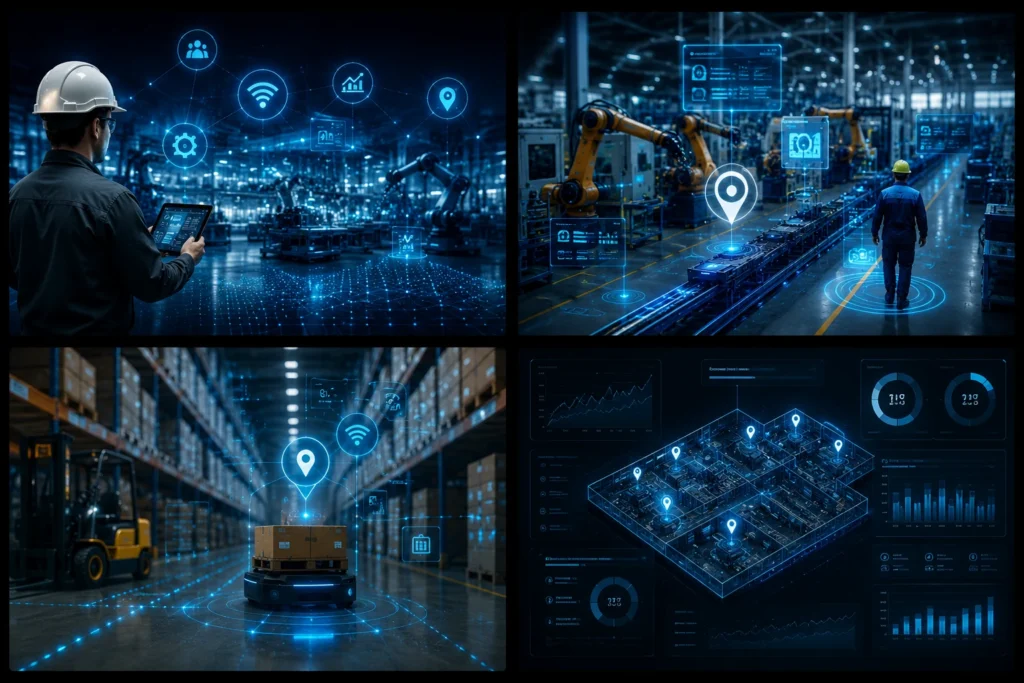
OEM Automotive Workforce Visibility AI
OEM Automotive Workforce Visibility AI provides enterprise AIoT workforce systems engineered specifically for OEM vehicle manufacturing environments requiring real-time personnel visibility, industrial safety analytics, RTLS workforce positioning, labor synchronization, smart factory access governance, contractor monitoring, and production staffing system.
Modern automotive manufacturing plants operate highly automated production system containing robotic welding cells, automated conveyor systems, AGV fleets, autonomous forklifts, EV battery assembly zones, high-voltage manufacturing environments, paint shop operations, torque verification stations, automated storage systems, and synchronized just-in-sequence assembly workflows.
OEM Automotive Workforce Visibility AI combines AI analytics, industrial IoT telemetry, UWB RTLS positioning, BLE workforce tracking, industrial edge computing, Wi-Fi 6 manufacturing connectivity, private 5G factory infrastructure, and intelligent access control systems into a unified automotive manufacturing workforce system.
The system supports workforce operations across
- Body-in-white production facilities
- Robotic welding environments
- Paint shop conveyor systems
- EV battery manufacturing lines
- Chassis assembly operations
- Final vehicle assembly plants
- Powertrain production facilities
- Smart warehouse logistics operations
- Sequencing centers
- Automated intralogistics corridors
Personnel Location System for Automotive Manufacturing
Personnel visibility within automotive manufacturing environments requires highly accurate positioning systems capable of operating reliably across metal-dense body shops, robotic welding cells, paint facilities, warehouse operations, and high-interference industrial environments.
OEM Automotive Workforce Visibility AI provides personnel location system using:
- UWB RTLS positioning systems
- BLE workforce telemetry
- RFID personnel identification
- Wi-Fi location analytics
- Industrial edge gateways
- AI occupancy analytics
- Geofencing system
- Multi-zone positioning system
- Real-time workforce telemetry
- Industrial wireless synchronization
UWB RTLS positioning infrastructure delivers highly accurate workforce location visibility within:
- Robotic welding stations
- EV battery assembly zones
- Torque verification cells
- Automated conveyor pathways
- AGV operating corridors
- Paint booth facilities
- Autonomous transport zones
- Chassis assembly operations
- Final assembly workstations
- Smart warehouse aisles
Personnel location system supports operational workflows including:
- Real-time operator tracking
- Assembly line workforce mapping
- Contractor movement monitoring
- Plant entry activity analytics
- Workforce occupancy visualization
- Shift transition coordination
- Workforce congestion analytics
- Restricted zone monitoring
- Production staffing visibility
- Cross-facility workforce synchronization
BLE workforce telemetry supports scalable workforce analytics across larger automotive campuses including:
- Distribution warehouses
- Supplier receiving docks
- Vehicle sequencing centers
- Logistics staging zones
- Finished vehicle yards
- Maintenance departments
- Administrative buildings
- Cross-dock facilities
- Material handling corridors
- Industrial parking compounds
AI workforce analytics help manufacturing organizations identify:
- Production staffing imbalances
- Labor congestion zones
- Workforce dwell patterns
- Unauthorized workforce movement
- Operational bottlenecks
- Shift overlap inefficiencies
- Safety zone violations
- Workforce traffic anomalies
- Idle labor conditions
- Restricted area exposure
Smart Factory Access Control
OEM automotive manufacturing facilities require secure workforce authentication systems capable of controlling personnel movement across restricted manufacturing environments containing robotics systems, automated machinery, high-voltage EV infrastructure, hazardous chemicals, and sensitive production assets.
OEM Automotive Workforce Visibility AI provides intelligent access governance using:
- AI badge verification
- Biometric access readers
- RFID workforce authentication
- Facial recognition terminals
- Multi-zone access orchestration
- Touchless workforce entry
- Smart turnstile integration
- Vehicle gate authentication
- Industrial identity management
- Workforce authorization analytics
OEM Automotive Workforce Visibility AI provides intelligent access governance using:
- AI badge verification
- Biometric access readers
- RFID workforce authentication
- Facial recognition terminals
- Multi-zone access orchestration
- Touchless workforce entry
- Smart turnstile integration
- Vehicle gate authentication
- Industrial identity management
- Workforce authorization analytics
Automotive production environments frequently contain highly restricted operational areas including:
- Robotic body shop cells
- EV battery manufacturing zones
- High-voltage powertrain assembly
- Paint chemical storage areas
- Industrial server rooms
- Prototype production lines
- Automated robotics corridors
- Calibration laboratories
- Quality engineering facilities
- Manufacturing control rooms
Workforce Safety System
Automotive manufacturing plants require advanced workforce safety system because personnel regularly interact with industrial robots, automated conveyors, AGV fleets, high-voltage EV systems, autonomous forklifts, heavy machinery, and high-speed production environments.
OEM Automotive Workforce Visibility AI delivers industrial safety system using:
- AI computer vision
- RTLS workforce telemetry
- Industrial IoT device
- Edge AI processing
- PPE compliance analytics
- Human-machine separation system
- Environmental safety monitoring
- Workforce exposure analytics
- Industrial safety orchestration
- Predictive safety system
The workforce safety environment supports:
- PPE compliance monitoring
- Emergency muster visibility
- Human-machine separation alerts
- Forklift pedestrian detection
- Fatigue exposure monitoring
- Hazard zone occupancy analytics
- Emergency evacuation coordination
- Workforce heat stress monitoring
- Proximity alert orchestration
- Industrial incident system
Human-machine separation system helps reduce operational risk involving:
- Robotic welding systems
- AGV transport fleets
- Autonomous forklifts
- Conveyor automation
- Gantry robotics
- Industrial manipulators
- ASRS operations
- Automated pallet systems
- Material handling robots
- Battery handling automation
AI safety analytics correlate telemetry from:
- RTLS positioning infrastructure
- Industrial computer vision systems
- Environmental monitoring device
- Machine telemetry systems
- Manufacturing execution systems
- Access control environments
- Conveyor telemetry systems
- AGV navigation systems
- Digital Andon infrastructure
- Industrial historian databases
Manufacturing safety analytics help organizations improve:
- OSHA compliance visibility
- EHS audit readiness
- Emergency response coordination
- Workforce incident investigation
- Near-miss analytics
- Manufacturing safety reporting
- Workforce exposure tracking
- Restricted zone enforcement
- Safety training validation
- Operational risk reduction
Production Labor Coordination
OEM automotive manufacturing operations depend heavily on synchronized labor coordination across body shops, paint facilities, chassis assembly operations, sequencing centers, warehouse logistics systems, and final vehicle assembly environments.OEM Automotive Workforce Visibility AI provides production labor coordination using AI workforce analytics, RTLS telemetry, MES-integrated staffing system, and industrial workforce orchestration systems.
The labor coordination system supports:
- Shift transition visibility
- Operator assignment tracking
- Team dispatch coordination
- Labor utilization analytics
- Cross-plant workforce synchronization
- Workforce balancing system
- Real-time staffing visibility
- Production labor forecasting
- Workforce productivity analytics
- Manufacturing staffing optimization
Automotive production environments require continuous synchronization between:
- Production takt time
- Workforce allocation
- Material sequencing
- AGV scheduling
- Inventory replenishment
- Assembly station staffing
- Quality inspection workflows
- Maintenance scheduling
- Shift change coordination
- Manufacturing throughput targets
AI workforce analytics identify:
- Labor allocation inefficiencies
- Production staffing gaps
- Workforce congestion zones
- Shift imbalance patterns
- Idle labor conditions
- Overtime exposure
- Assembly bottlenecks
- Workforce scheduling conflicts
- Manufacturing downtime causes
- Cross-functional staffing needs
Labor system dashboards consolidate telemetry from:
- MES manufacturing systems
- Workforce scheduling systems
- RTLS infrastructure
- Access governance systems
- Industrial edge analytics
- AGV coordination systems
- Warehouse operations
- Production KPI environments
- Digital Andon systems
- ERP manufacturing systems
RTLS Workforce Tracking Infrastructure
OEM automotive manufacturing facilities require RTLS infrastructure capable of supporting highly accurate workforce telemetry within large industrial environments containing metal interference, robotic systems, autonomous transport systems, and complex factory layouts.
OEM Automotive Workforce Visibility AI supports industrial RTLS technologies including:
- UWB workforce positioning
- BLE workforce tracking
- RFID workforce telemetry
- Wi-Fi workforce analytics
- GPS yard visibility
- Industrial device fusion
- AI location system
- Workforce geofencing
- Occupancy analytics
- Real-time positioning orchestration
UWB workforce tracking infrastructure supports precision positioning within:
- Robotic welding operations
- EV battery production lines
- Automated assembly cells
- Paint conveyor systems
- Torque verification stations
- Autonomous logistics corridors
- High-voltage assembly zones
- Smart warehousing operations
- Conveyor transfer areas
- Final assembly stations
RTLS workforce system enables:
- Workforce safety monitoring
- Occupancy visibility
- Production staffing coordination
- Emergency response orchestration
- Restricted zone enforcement
- Workforce traffic analysis
- Operational compliance reporting
- Asset-personnel interaction visibility
- Manufacturing event correlation
- Workforce movement history
Automotive manufacturing organizations increasingly require RTLS infrastructure supporting interoperability with:
- OPC UA manufacturing systems
- MQTT event streaming systems
- MES environments
- SCADA systems
- Manufacturing historians
- Industrial data lakes
- Digital twin environments
- Enterprise AI analytics
- OT cybersecurity systems
Smart factory dashboards
AI Workforce Dashboards for Automotive Plants
Manufacturing leadership teams require centralized workforce system dashboards capable of visualizing workforce telemetry, labor coordination, production staffing, industrial safety conditions, and operational performance across automotive manufacturing facilities.
OEM Automotive Workforce Visibility AI provides workforce dashboards supporting:
- Real-time workforce visualization
- Labor utilization reporting
- Workforce occupancy heatmaps
- Safety event dashboards
- RTLS personnel analytics
- Shift coordination system
- Manufacturing KPI visibility
- Workforce congestion monitoring
- Multi-site workforce analytics
- AI staffing system
Digital twin workforce dashboards help manufacturing operations teams visualize:
- Workforce movement patterns
- AGV and personnel interaction
- Safety zone occupancy
- Production staffing distribution
- Material handling congestion
- Assembly station activity
- Workforce response times
- Emergency evacuation readiness
- Cross-facility labor coordination
- Industrial workflow synchronization
AI workforce dashboards consolidate telemetry from:
- RTLS positioning systems
- BLE workforce devices
- UWB personnel tags
- Industrial edge gateways
- MES manufacturing systems
- EHS reporting systems
- Workforce scheduling tools
- Access control systems
- Industrial IoT device
- Manufacturing execution environments
Wireless Workforce Infrastructure for Smart Automotive Factories
The wireless system enables scalable workforce visibility while maintaining reliable telemetry performance across complex automotive manufacturing environments.
OEM Automotive Workforce Visibility AI supports industrial wireless infrastructure technologies optimized for automotive manufacturing operations including:
- Private 5G manufacturing networks
- Wi-Fi 6 industrial connectivity
- UWB RTLS infrastructure
- BLE workforce telemetry
- RFID workforce systems
- Industrial edge gateways
- Secure wireless authentication
- MQTT workforce telemetry
- OPC UA interoperability
- Low-latency industrial networking
Industrial wireless infrastructure supports workforce telemetry synchronization across:
- Body shop automation zones
- Paint facilities
- EV battery production
- Final assembly operations
- Warehouse logistics
- Supplier sequencing facilities
- Vehicle yards
- Smart conveyor systems
- AGV transport corridors
- Industrial intralogistics environments
Workforce Compliance and Manufacturing Governance
OEM automotive manufacturers require workforce system systems capable of supporting operational compliance, audit readiness, industrial accountability, and manufacturing governance.
OEM Automotive Workforce Visibility AI supports:
- OSHA compliance reporting
- Workforce audit trails
- EHS compliance analytics
- Restricted area reporting
- Workforce certification visibility
- Safety training validation
- Emergency response documentation
- Contractor accountability
- Operational governance reporting
- Manufacturing compliance system
Manufacturing compliance visibility improves transparency across workforce operations while supporting synchronized industrial safety system, workforce telemetry analytics, and enterprise manufacturing governance.
Automotive Workforce System for Smart Manufacturing Operations
OEM automotive manufacturing operations increasingly depend on AI-driven workforce system capable of synchronizing personnel visibility, RTLS positioning, industrial safety monitoring, labor coordination, smart access governance, and manufacturing analytics across highly automated production environments.
OEM Automotive Workforce Visibility AI provides automotive manufacturers with enterprise AIoT workforce systems supporting:
- Real-time workforce visibility
- Smart factory personnel tracking
- Industrial safety analytics
- UWB RTLS workforce positioning
- AI labor coordination
- Manufacturing compliance visibility
- Workforce utilization system
- Access governance orchestration
- OT and IT workforce integration
- Smart factory operational system
OEM Vehicle Manufacturing AI was created within Aperture Venture Studio with support from GAO, leveraging decades of industrial IoT deployment experience involving RTLS infrastructure, industrial wireless systems, AI manufacturing analytics, workforce telemetry systems, edge computing environments, and enterprise automotive manufacturing integration.
The system supports automotive manufacturers requiring scalable workforce system capable of operating across high-volume vehicle assembly plants, EV manufacturing facilities, robotic automation environments, industrial logistics operations, and global smart automotive manufacturing system.