
About OEM Vehicle Manufacturing AI
Automotive OEM Smart Factory AIoT Expertise, Industrial RTLS Manufacturing System, MES-Orchestrated Production Visibility, and Automotive Operational Technology Integration
About OEM Vehicle Manufacturing AI
Automotive OEM Smart Factory AIoT Expertise, Industrial RTLS Manufacturing System, MES-Orchestrated Production Visibility, and Automotive Operational Technology Integration
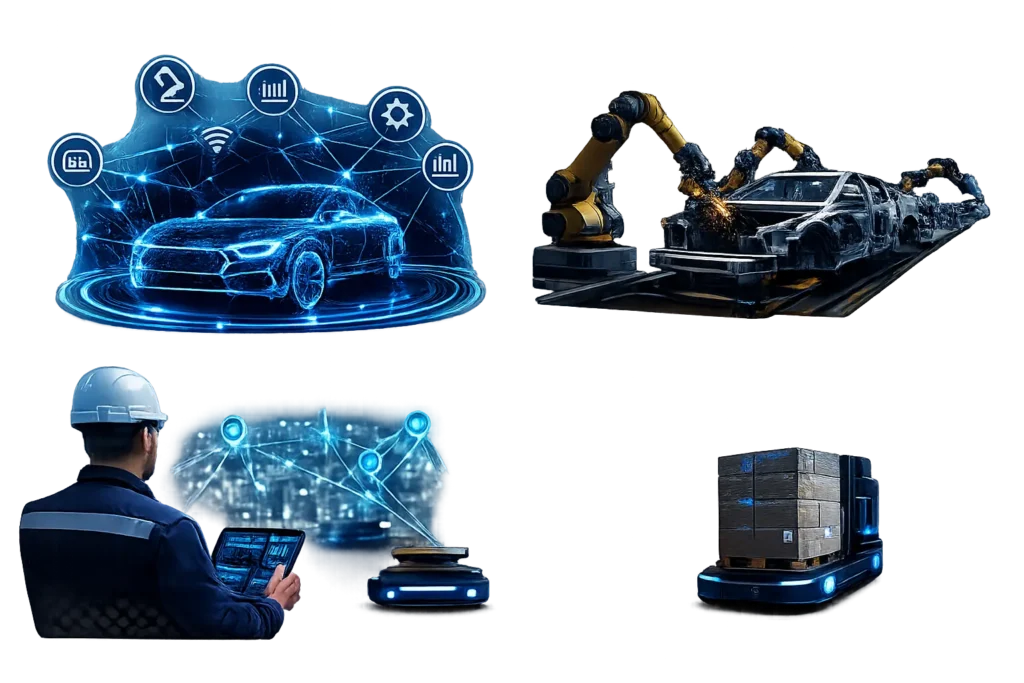
OEM Vehicle Manufacturing AI focuses exclusively on AI-enabled operational solution systems engineered for automotive OEM manufacturing environments including body-in-white welding operations, paint shop automation systems, mixed-model final assembly lines, EV battery manufacturing workflows, automotive intralogistics facilities, supplier sequencing operations, and finished vehicle distribution yards. The organization develops industrial AIoT systems supporting workforce visibility, industrial access governance, tooling system, inventory orchestration, VIN genealogy, manufacturing execution analytics, automotive production telemetry, and industrial wireless operational technology infrastructure across high-throughput automotive assembly environments.
Modern automotive OEM manufacturing operations require synchronized coordination between
- Manufacturing execution systems
- PLC-controlled robotic welding cells
- Automated conveyor infrastructure
- AGV fleet orchestration
- Torque verification systems
- Vehicle sequencing workflows
- EV battery genealogy systems
- Supplier logistics coordination
- Industrial RTLS positioning
- RFID manufacturing visibility
- BLE workforce telemetry
- Private 5G manufacturing networks
- Wi-Fi 6 factory infrastructure
- Industrial edge computing
- OPC UA interoperability
- MQTT manufacturing event streaming
- AI-driven production analytics
- Industrial cybersecurity segmentation
- Smart yard positioning systems
- Automotive quality inspection systems
Automotive OEM facilities manufacturing passenger vehicles, EV systems, crossover systems, hybrid drivetrains, commercial vehicles, and mixed-model assembly programs require deterministic industrial communications, low-latency telemetry, synchronized operational visibility, secure OT infrastructure, and scalable manufacturing systems capable of supporting continuous production operations across body shop, paint shop, final assembly, sequencing, logistics, and outbound vehicle operations.
OEM Vehicle Manufacturing AI was developed within Aperture Venture Studio with support from GAO. The organization draws from decades of industrial IoT implementation experience supporting automotive OEM manufacturers, industrial automation modernization programs, RTLS positioning deployments, industrial wireless infrastructure, operational technology integration initiatives, manufacturing analytics systems, and enterprise smart factory transformation projects across North America.
Engineering and deployment teams supporting the organization have contributed to thousands of industrial IoT implementations involving manufacturing telemetry systems, industrial RFID infrastructure, workforce tracking systems, industrial edge computing, automotive production analytics, industrial wireless manufacturing networks, and operational technology cybersecurity programs supporting Fortune 500 manufacturing environments, advanced research institutions, universities, and government organizations.
Company Overview
Automotive OEM Manufacturing System, Industrial AIoT Operations, and Smart Factory Deployment Expertise
OEM Vehicle Manufacturing AI specializes in automotive OEM manufacturing operations requiring real-time workforce visibility, industrial access governance, tooling telemetry, inventory system, vehicle sequencing analytics, manufacturing traceability, and production execution synchronization.
The organization supports automotive manufacturing environments involving:
- Body-in-white production
- Robotic spot welding operations
- Paint booth automation
- Final assembly coordination
- EV battery integration
- Powertrain assembly
- Mixed-model manufacturing
- Supplier sequencing
- Vehicle commissioning
- Finished vehicle logistics
- Smart yard management
- Automotive intralogistics
Automotive OEM assembly operations frequently involve:
- High-density robotic infrastructure
- Real-time takt-time constraints
- Sequenced material flow
- Conveyor synchronization
- Industrial wireless telemetry
- Operational technology segmentation
- Hybrid cloud manufacturing
- Multi-building production campuses
- Restricted production zones
- High-volume inventory movement
OEM Vehicle Manufacturing AI concentrates on industrial AIoT systems supporting:
- Workforce positioning analytics
- Industrial RTLS deployment
- RFID manufacturing telemetry
- BLE workforce system
- AI-powered production visibility
- Industrial edge analytics
- Smart factory interoperability
- Manufacturing event orchestration
- OT cybersecurity governance
- Automotive MES synchronization
Automotive OEM production facilities increasingly require unified operational solution connecting manufacturing engineering, production operations, maintenance teams, supplier logistics, workforce safety governance, industrial automation systems, and enterprise manufacturing analytics systems.
The organization’s deployment methodologies prioritize operational continuity, industrial interoperability, deterministic communications, low-latency telemetry processing, and scalable automotive smart factory systems capable of supporting evolving EV manufacturing operations and digitally connected production system.
Automotive Manufacturing Expertise
Body-in-White Operations, EV Manufacturing System, Automotive Intralogistics, and Vehicle Assembly Analytics
OEM Vehicle Manufacturing AI focuses specifically on automotive OEM manufacturing operations rather than generalized industrial IoT environments. The organization’s engineering expertise centers on vehicle assembly system requiring synchronized robotics, industrial automation, AI-driven production analytics, and manufacturing telemetry orchestration.
Automotive manufacturing expertise includes:
- Body-in-white robotic welding visibility
- Framing station telemetry
- Paint process monitoring
- Final assembly synchronization
- Torque verification integration
- EV battery genealogy
- Vehicle sequencing analytics
- Automotive intralogistics orchestration
- Supplier delivery synchronization
- Smart yard positioning
- AGV fleet telemetry
- Automotive traceability systems
Automotive OEM production operations frequently require:
- VIN-level manufacturing visibility
- Real-time workforce coordination
- Industrial access governance
- Tooling asset system
- Conveyor synchronization
- Automated storage interoperability
- Production throughput analytics
- Manufacturing KPI monitoring
- AI-assisted anomaly detection
- Industrial safety telemetry
The organization supports automotive OEM manufacturers implementing modernization initiatives involving:
- AI-powered manufacturing analytics
- Industrial edge computing
- Workforce occupancy analytics
- Industrial RTLS positioning
- EV battery traceability
- Mixed-model assembly visibility
- Real-time production telemetry
- Industrial IoT interoperability
- Smart factory networking
- Manufacturing execution optimization
Engineering teams supporting OEM Vehicle Manufacturing AI understand the operational complexity associated with automotive production environments where production interruptions, sequencing delays, conveyor stoppages, or supplier synchronization failures can affect throughput, takt-time stability, quality assurance, and outbound logistics coordination.
Industrial AIoT Capabilities
Automotive Manufacturing Telemetry, Industrial Edge Computing, and AI-Driven Production Analytics
OEM Vehicle Manufacturing AI develops industrial AIoT systems optimized for automotive OEM manufacturing environments requiring scalable telemetry processing, industrial interoperability, manufacturing event orchestration, and low-latency operational analytics.
Industrial AIoT capabilities include:
- Industrial edge orchestration
- Real-time telemetry analytics
- AI-assisted anomaly detection
- Production throughput monitoring
- Operational KPI analytics
- RTLS positioning system
- RFID manufacturing visibility
- BLE workforce telemetry
- Industrial protocol normalization
- Smart factory occupancy analytics
- Manufacturing workflow orchestration
- Predictive maintenance coordination
Automotive OEM facilities generate operational telemetry from:
- PLC-controlled robotics systems
- Spot welding cells
- Torque verification stations
- Machine vision inspection systems
- Industrial handheld devices
- RFID readers
- UWB positioning anchors
- BLE personnel badges
- Environmental monitoring system
- AGV telemetry systems
- Automated conveyor infrastructure
The organization supports interoperability across:
- OPC UA industrial environments
- MQTT manufacturing telemetry
- MES integration frameworks
- ERP synchronization systems
- SCADA operational telemetry
- REST API orchestration
- Industrial middleware systems
- Manufacturing data federation
Automotive manufacturing analytics systems frequently require synchronization between operational technology systems and enterprise manufacturing environments while maintaining OT cybersecurity segmentation, deterministic communications, and production continuity across distributed automotive assembly operations.
Workforce Visibility Systems
UWB Workforce Tracking, BLE Personnel Monitoring, and Automotive Safety Zone System
Automotive OEM manufacturing operations require workforce visibility systems supporting operational safety, restricted-zone authorization, contractor governance, emergency response coordination, and workforce utilization analytics across robotic production environments.
OEM Vehicle Manufacturing AI supports:
- UWB workforce positioning
- BLE personnel telemetry
- Smart factory occupancy analytics
- Emergency muster visibility
- Human-machine separation monitoring
- Forklift pedestrian detection
- Restricted-zone authorization
- Contractor movement analytics
- Shift-transition visibility
- Workforce utilization telemetry
- Production labor coordination
Cross-plant workforce synchronization
Automotive manufacturing facilities frequently require workforce visibility around:
- Robotic welding cells
- Automated conveyor systems
- EV battery integration zones
- High-voltage operations
- Paint booth corridors
- AGV traffic lanes
- Automated material handling systems
- Maintenance operations
- Restricted production areas
The organization’s workforce visibility systems support:
- Low-latency positioning
- Industrial edge processing
- Real-time occupancy monitoring
- Industrial access integration
- Workforce telemetry synchronization
- Safety-event orchestration
- Multi-building manufacturing coverage
- Industrial wireless resiliency
Automotive OEM assembly operations increasingly require workforce telemetry systems capable of improving safety coordination while maintaining manufacturing throughput, industrial wireless stability, and operational continuity across complex production environments.
Manufacturing Integration Expertise
Automotive MES Integration, PLC Communications, SCADA Connectivity, and Factory Automation Synchronization
OEM Vehicle Manufacturing AI supports automotive manufacturing integration systems connecting operational technology infrastructure, industrial automation systems, enterprise manufacturing systems, and production analytics environments.
Manufacturing integration expertise includes:
- MES synchronization
- PLC communications
- SCADA interoperability
- Robotics telemetry integration
- Conveyor automation connectivity
- Industrial middleware orchestration
- ERP manufacturing synchronization
- Digital twin telemetry
- Manufacturing data federation
- Industrial API orchestration
- Real-time event routing
- Production telemetry normalization
Automotive OEM manufacturing environments frequently require integration between:
- Production scheduling systems
- Vehicle routing workflows
- Supplier sequencing operations
- Quality inspection telemetry
- Torque validation systems
- Inventory orchestration
- Manufacturing KPI analytics
- Operational downtime visibility
- EV battery genealogy systems
- Workforce visibility systems
The organization’s integration methodologies prioritize:
- Deterministic manufacturing communications
- Low-latency operational telemetry
- Industrial network resiliency
- Operational continuity
- OT cybersecurity governance
- Multi-site manufacturing synchronization
- Real-time production visibility
- Industrial interoperability
Automotive manufacturing integration systems commonly involve hybrid environments combining cloud manufacturing systems, on-premises MES infrastructure, industrial edge gateways, operational data lakes, and distributed telemetry processing across multiple automotive assembly plants.
Wireless Infrastructure Technologies
Private 5G Manufacturing, RFID Manufacturing Systems, Wi-Fi 6 Factory Networking, BLE Telemetry, and UWB RTLS System
OEM Vehicle Manufacturing AI supports industrial wireless systems optimized for automotive OEM manufacturing operations involving high-density automation systems, mobile industrial assets, and real-time production telemetry.
Wireless infrastructure expertise includes:
- Private 5G manufacturing
- Wi-Fi 6 factory networking
- RFID manufacturing visibility
- UWB RTLS positioning
- BLE industrial telemetry
- LoRaWAN industrial sensing
- Industrial roaming system
- RF coexistence optimization
- Smart factory mobility systems
- Deterministic wireless communications
Automotive OEM facilities deploy wireless infrastructure supporting:
- Workforce tracking
- Industrial access governance
- Tooling visibility
- AGV fleet coordination
- Vehicle yard positioning
- Inventory telemetry
- Manufacturing event synchronization
- Safety analytics
- Predictive maintenance
- Supplier sequencing visibility
Automotive production environments introduce RF challenges involving:
- Metallic interference
- Robotic welding reflections
- Multi-building wireless coverage
- Outdoor logistics telemetry
- High-density industrial endpoints
- Industrial mobility requirements
- Conveyor infrastructure shielding
The organization supports industrial wireless planning involving:
- RF site surveys
- RTLS calibration
- RFID read-zone optimization
- BLE gateway density planning
- UWB anchor positioning
- Industrial network segmentation
- Edge synchronization
- Wireless resiliency validation
Automotive OEM manufacturing facilities increasingly deploy hybrid wireless systems combining RFID, UWB, BLE, Wi-Fi 6, and private 5G infrastructure simultaneously across body shop operations, final assembly environments, intralogistics operations, and finished vehicle distribution yards.
Smart Factory System and Automotive Manufacturing Consultation
Automotive OEM Smart Factory Modernization, Industrial OT System, and AIoT Deployment Methodology
OEM Vehicle Manufacturing AI supports automotive OEM manufacturers implementing AI-enabled operational solution systems across production operations, workforce visibility, inventory orchestration, manufacturing execution analytics, EV battery genealogy, and industrial automation environments.
The organization’s deployment methodology includes:
- Manufacturing workflow assessment
- Industrial network analysis
- OT cybersecurity review
- Wireless infrastructure planning
- RTLS positioning validation
- MES integration mapping
- Production telemetry orchestration
- Industrial edge deployment
- Workforce visibility calibration
- Manufacturing KPI alignment
Automotive OEM manufacturers modernizing smart factory operations frequently require:
- Industrial interoperability
- Multi-plant synchronization
- VIN-level traceability
- AI-driven manufacturing analytics
- Workforce telemetry orchestration
- Industrial cybersecurity segmentation
- Supplier logistics system
- EV manufacturing telemetry
- Smart yard coordination
- Real-time operational visibility
OEM Vehicle Manufacturing AI supports automotive engineering teams, operational technology specialists, industrial automation architects, manufacturing systems integrators, smart factory modernization leaders, and enterprise manufacturing organizations implementing AIoT operational solution across modern automotive OEM manufacturing system.