
Physical AI and AIoT Solutions for OEM Vehicle Manufacturing
Operational priorities determine which technologies are useful. OEMNex applies Physical AI and Artificial Intelligence of Things (AIoT) concepts to the equipment, material flows, production processes, and plant environments involved in OEM vehicle manufacturing. The focus is on connecting physical-world observations with operational decisions and, where appropriate, authorized physical action.
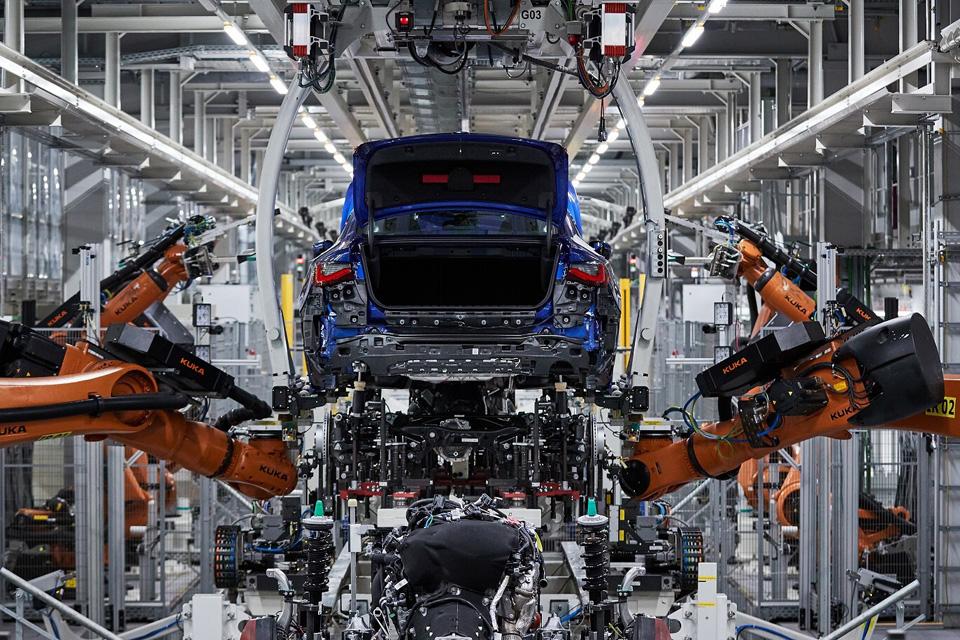
For manufacturing engineers, plant IT teams, controls engineers, maintenance leaders, quality managers, system integrators, procurement teams, and technical executives, the practical question is not whether AI can analyze factory data. It is whether the right information can be captured reliably, connected to the correct asset or process, evaluated in context, and turned into a response that can be reviewed and verified.
Physical AI and AIoT Solution Areas
The solution areas below address distinct manufacturing problems. Each requires different equipment data, integration points, decision logic, user responsibilities, and evaluation criteria. Some are core solution areas; others are proposed or developing areas that should be validated through a defined pilot before broader deployment.
Asset and People Tracking and Traceability
Status: Core solution area
Tracking and traceability connect asset identity with location, movement, handoff, and process records. In an automotive plant, this can apply to production fixtures, tooling, containers, work-in-process materials, vehicle bodies, battery-related equipment, and other high-value assets moving between receiving, storage, staging, production, inspection, and shipping areas.
- Inputs: RFID, Bluetooth Low Energy (BLE), Ultra-Wideband (UWB), machine vision, location zones, timestamps, asset identifiers, and production or inventory records.
- Decisions: determine whether an expected asset movement occurred, whether a handoff record is complete, and whether an event requires reconciliation.
- Possible actions: notify a responsible team, request a record correction, initiate a workflow, or route an exception for human review.
- Outcomes: stronger traceability, faster reconciliation, better movement visibility, and more reliable operational records.
Condition Monitoring
Status: Core solution area
Condition monitoring uses measurements to establish a view of equipment and process state. Automotive manufacturing environments can include conveyors, robotic cells, welding equipment, presses, pumps, motors, compressors, machining systems, paint-shop equipment, test equipment, and other production assets where abnormal conditions can affect throughput, quality, or maintenance workload.
- Inputs: vibration, temperature, pressure, flow, electrical measurements, acoustic signals, visual observations, environmental conditions, equipment identity, operating mode, and sensor-health information.
- Decisions: distinguish normal variation from abnormal conditions, prioritize review, and determine whether an inspection or maintenance response is warranted.
- Possible actions: create an alert, request inspection, open a maintenance workflow, or provide information for an approved operational response.
- Outcomes: earlier visibility into equipment conditions, more focused maintenance investigation, and better evidence for operational decisions.
Predictive Maintenance
Status: Proposed or developing solution area
Predictive maintenance builds on condition and operating information to support maintenance decisions. For OEM vehicle manufacturing, the appropriate method depends on the equipment failure modes, maintenance history, operating variation, available labels, and the actions a maintenance organization can realistically take after a warning.
- Inputs: condition histories, operating states, maintenance work orders, inspection findings, failure records, production context, and equipment configuration.
- Decisions: identify anomalies, estimate failure risk, prioritize inspections, or assess whether remaining-life estimation is justified by the available evidence.
- Possible actions: schedule an inspection, prioritize a work order, review a suspected failure mode, or continue monitoring under defined criteria.
- Outcomes: useful warning time, reduced avoidable disruption, better maintenance prioritization, and measurable follow-up against a baseline.
Inspection and Quality Intelligence
Status: Proposed or developing solution area
Inspection and quality intelligence combines suitable sensing with AI-supported assessment and reviewed quality workflows. In vehicle manufacturing, use cases may involve body panels, welds, coatings, assemblies, components, dimensional characteristics, or other inspection tasks where defect definitions, lighting, access, surface condition, and acceptance criteria materially affect performance.
- Inputs: machine vision, thermal or acoustic sensing where appropriate, inspection images, process context, part or vehicle identity, acceptance criteria, and representative labeled test cases.
- Decisions: classify or flag potential defects, identify uncertain results, prioritize review, and determine whether additional inspection is needed.
- Possible actions: route a finding for quality review, request reinspection, support quarantine or sorting workflows where validated, and retain a traceable decision record.
- Outcomes: more consistent inspection workflows, faster review of relevant findings, and measurable evidence about missed defects, false positives, and inspection time.
Operational Optimization and Physical Action
Status: Proposed or developing solution area
Operational optimization connects a defined manufacturing objective with available decisions and actions. In an automotive plant, the objective may involve production throughput, energy use, material flow, equipment availability, response time, or another measurable operating constraint. Physical execution requires clear authority, equipment interfaces, operating limits, fallback behavior, and confirmation of the resulting state.
- Inputs: production state, asset availability, sensor measurements, process constraints, equipment status, schedules, and business rules.
- Decisions: recommend a change, request human approval, or determine whether a bounded autonomous action is permitted within defined limits.
- Possible actions: adjust an authorized equipment setting, coordinate material movement, initiate a validated inspection mission, or issue another approved command through the appropriate control interface.
- Outcomes: measurable improvement against a baseline while tracking rejected commands, constraint violations, interventions, and recovery behavior.
Identify, Sense, Decide, Act, Verify
The solution areas share a practical architecture: identify what is involved, sense its condition or environment, use AI to support a decision, and connect approved decisions to an appropriate response. The implementation may use only some of these functions. A traceability workflow may stop at event processing and human review, while a bounded Physical AI application may continue through a controlled equipment interface and verified feedback.
- Identify: associate observations with vehicles, components, tooling, equipment, workstations, containers, or defined plant zones.
- Sense: capture physical and process measurements with appropriate sampling, calibration, timestamps, and data-quality checks.
- Decide: apply rules, analytics, machine learning, or other AI methods to detection, prioritization, prediction, or optimization tasks with defined evaluation criteria.
- Act: connect an approved decision to a workflow, user response, controller, actuator, robot, or other physical interface only where the authority and safeguards are established.
- Verify: compare the requested or expected result with subsequent sensor, position, inspection, or equipment-state evidence.
Integration with Manufacturing Systems
A useful implementation keeps the physical plant and the enterprise systems connected without treating every data source as equally reliable. Field devices, sensors, readers, cameras, gateways, edge computers, controllers, servers, and cloud services can each have different timing, availability, maintenance, and security requirements. Manufacturing systems such as Manufacturing Execution Systems (MES), Enterprise Resource Planning (ERP), Warehouse Management Systems (WMS), Computerized Maintenance Management Systems (CMMS), and Supervisory Control and Data Acquisition (SCADA) platforms may also have established identifiers, interfaces, and ownership boundaries.
The design should therefore define the source of each observation, the asset or process identity associated with it, timestamp and operating context, acceptable data quality, downstream decision, responsible user, and expected behavior when information or connectivity is unavailable. This makes it possible to evaluate a solution as an operational system rather than as an isolated AI model.
Selecting a Solution Area
A solution should be selected by the operational question it must answer, not by the technology label. The following comparison provides a starting point for requirements discussions and pilot design.
- Traceability: use when the primary need is to know where an asset, material, vehicle, fixture, or handoff record is and whether the expected movement occurred.
- Condition monitoring: use when equipment state must be observed continuously or periodically to identify abnormal conditions and support follow-up.
- Predictive maintenance: consider when failure evidence, condition history, and actionable maintenance workflows are sufficient to justify predictive analysis.
- Inspection and quality intelligence: consider when repeatable inspection criteria and representative visual or sensor data can support measurable assessment.
- Operational optimization and physical action: consider when a measurable objective can be expressed with constraints, authorized actions, and a method for verifying the resulting physical state.
Practical Deployment and Evaluation
A disciplined implementation starts with the manufacturing workflow and its operational constraints. Technology selection follows the information and response requirements rather than the other way around.
Define the equipment, process step, production area, users, current workflow, failure or exception modes, and desired outcome. Document where observations originate, who owns the records, what decisions are currently made, and which actions are permitted.
Establish asset identifiers, timestamps, operating modes, sensor metadata, event definitions, historical records, labels where required, and data-quality rules. Map the interfaces to relevant manufacturing and enterprise systems and define how duplicates, delayed events, rejected records, and outages will be handled.
A pilot should test a defined operational question under representative conditions. Include normal operation, missing data, exceptions, communication loss, equipment variation, and recovery where they are relevant to the use case. Measure performance against a baseline rather than relying on model output alone.
Confirm that alerts reach the right users, recommendations are understandable enough for the intended decision, physical commands have appropriate authorization, and resulting states can be independently checked. Document limitations, uncertain results, intervention requirements, and maintenance responsibilities.
Deployment may involve edge processing, on-site servers, private hosting, cloud services, or a hybrid arrangement. The choice should reflect latency, connectivity, data handling, support capacity, cybersecurity boundaries, model monitoring, device maintenance, and integration ownership.
Evaluation Criteria
Evidence should match the operational problem. Useful measures can include event completeness for traceability, false-event rates and reconciliation time for tracking, alert usefulness and detection delay for condition monitoring, warning time and false alarms for predictive maintenance, defect detection and inspection time for quality applications, and verified completion, constraint violations, intervention rate, and recovery behavior for physical-action workflows.
Where a capability is proposed or developing, the appropriate next step is a pilot that establishes the baseline, test cases, acceptance criteria, limitations, and responsibilities before making broader performance claims. Verified results should be reported separately from proposed demonstrations or expected outcomes.
Explore OEMNex Solutions and Resources
Explore the solution areas alongside the Physical AI and AIoT engines, technology and integration components, and application scenarios. Together, these resources provide a path from an identified manufacturing problem to requirements definition, pilot evaluation, integration planning, and deployment decisions.